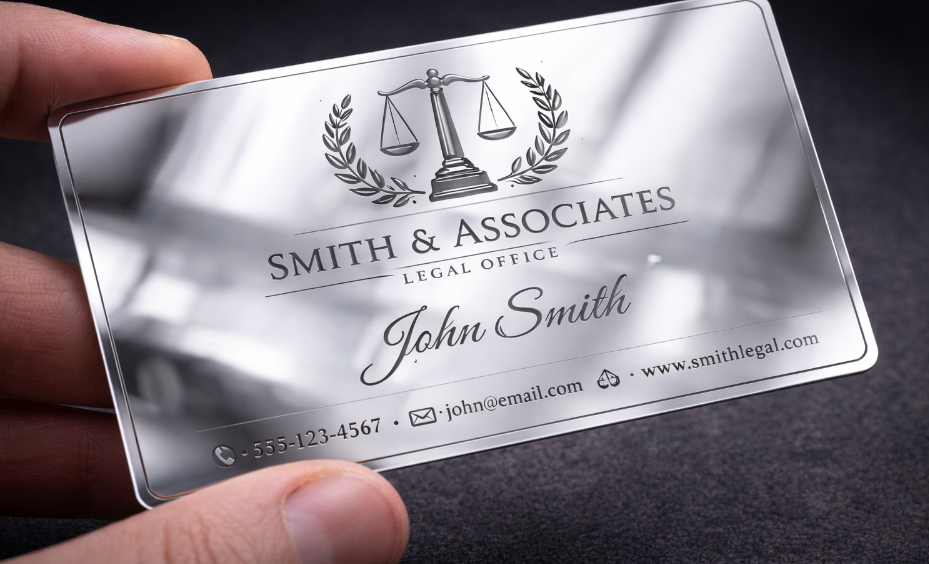
The short answer is yes, but not for every professional and not in every situation. A metal business card delivers the strongest return when your work depends on credibility, trust, and a first impression that has to land in the first few seconds of a conversation. If that describes how you do business, it pays for itself quickly. If it doesn't, paper may still be the more practical choice.
What Actually Makes a Card Feel Premium
Most people can tell the difference between an ordinary card and a premium one within a second of touching it. That reaction isn't caused by one feature. It comes from material, weight, and finish working together. Paper, no matter how thick or textured, will always feel disposable next to metal. Stainless steel, 24K gold plating, and silver mirror finishes carry weight and presence that communicate permanence before anyone reads a word on the surface.
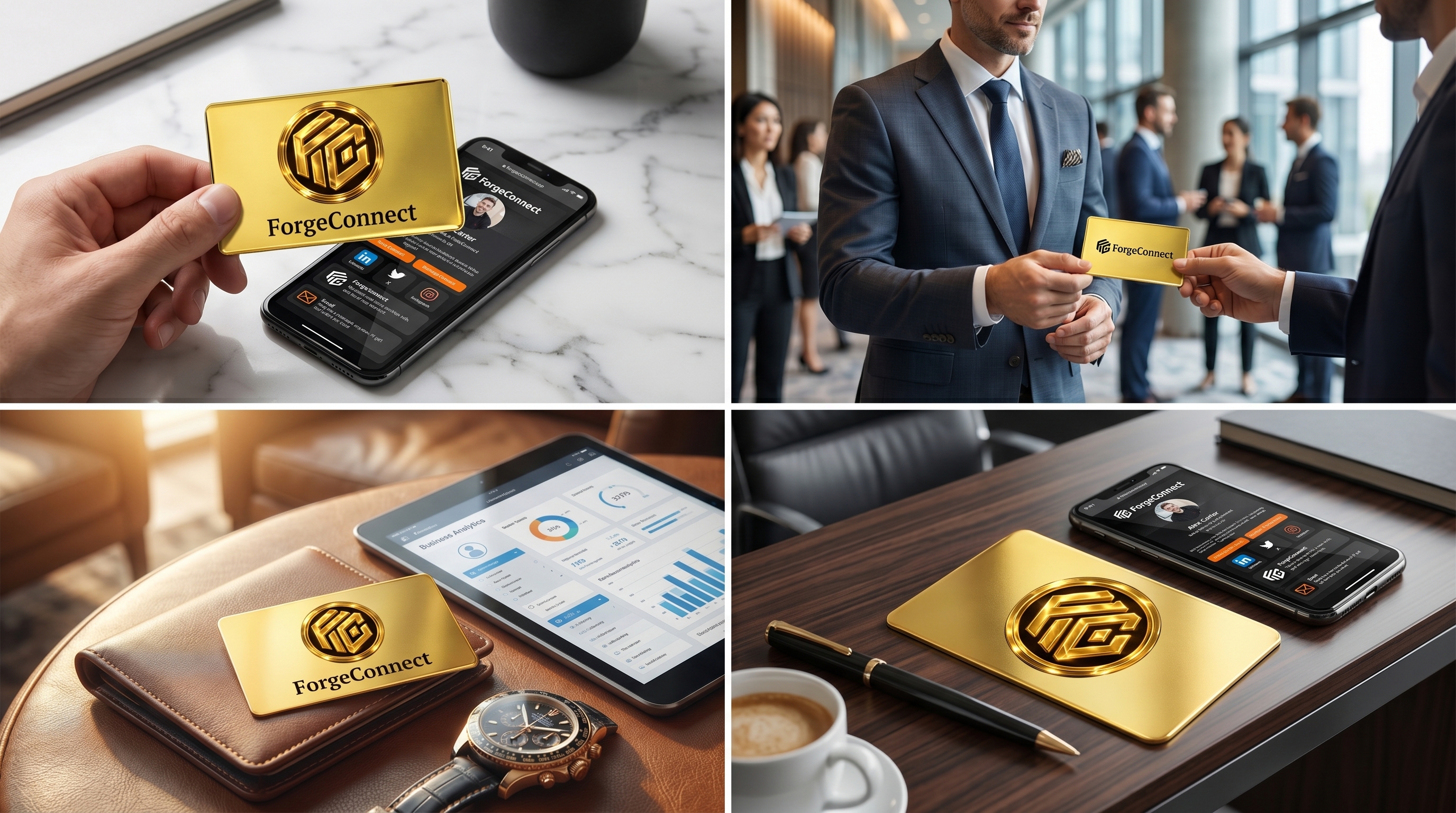
Design and detail turn that raw material into a finished product: laser-etched logos and text that never fade or peel, edge finishing that feels deliberate rather than mass-produced, and a minimalist layout that lets the material do the talking. The finish itself sends a signal before the conversation even starts. 24K gold tends to read as luxury and finance, silver mirror reads as modern and tech-forward, and matte black reads as bold and creative. If a specific finish already fits your brand, see our guides to black metal finishes and custom branding on metal. None of this matters if the card stops at looking expensive. The best ones are also built to work, and that is where an embedded NFC chip comes in.
Who Gets the Most Value From a Metal Card
A metal card is not for everyone, and it doesn't need to be. It earns its cost fastest for professionals whose business runs on high-value, face-to-face relationships:
- Real estate agents selling premium properties, where perception can decide who wins the listing
- Financial advisors and wealth managers handling six- and seven-figure client portfolios
- Founders and executives pitching investors or signing enterprise clients
- Attorneys and executive consultants whose work depends on trust at first contact
- Automotive sales professionals at luxury and performance dealerships
- Executive coaches and consultants whose personal brand is their business
For all of these, the card is not a formality. It is a credibility signal. It makes the most sense wherever you meet people face to face and a first impression can directly influence whether they do business with you. It makes far less sense if you rarely meet clients in person, hand out cards in bulk as throwaway promotional items, or work in an industry where visual presentation doesn't move the decision. If retention, reaction, and follow-up don't matter to how you win business, the upgrade isn't worth it.
Real Estate, Finance, and Automotive: A Closer Look
Three industries see a particularly strong version of this effect, each for a slightly different reason. In real estate, a seller choosing who lists their home is choosing who to trust with a six- or seven-figure asset, and a paper card simply doesn't match a multi-million-dollar listing. In finance, advisors and wealth managers are asking clients to hand over significant assets, so the card in their hand needs to project the same seriousness as the advice they give. In automotive sales, the brand experience starts at the handshake, which is why dealerships for brands like Mercedes-Benz, BMW, Porsche, and Tesla are increasingly outfitting reps with metal cards that match what's on the showroom floor.
The common thread: in all three, the card changes hands in the same sixty seconds where trust is won or lost, before any pitch, listing presentation, or test drive begins.
The Psychology Behind the Reaction
The effect isn't just anecdotal. Research on haptic perception shows that the weight and texture of a physical object shapes how people judge the person holding it: a heavier object reads as more stable, a smooth, polished surface reads as more professional. That is what happens the moment you hand someone a metal card. They pause, turn it over, and pay attention in a way a paper card rarely earns.
That pause matters more as the stakes rise. Handing over a paper card at a C-suite dinner or an investor meeting can feel mismatched, like wearing sneakers to a boardroom. It isn't about vanity. It's about congruence: when every other signal you send, your attire, your language, your portfolio, communicates authority, your card should match too. Two real estate agents meeting the same seller, one with a paper card and one with a sculpted steel card, have already produced a subconscious ranking before the listing presentation even starts. The effect compounds after the meeting ends, too. A paper card gets dropped in a drawer, while a metal card gets left on a desk, shown to a colleague, and remembered.
The ROI Math: Is It Actually Worth It
Strip away the psychology and the industry specifics, and the case comes down to a numbers problem. A box of 500 paper cards costs roughly $30 to $50 and gets reordered multiple times a year. Change your title, phone number, or company name and the entire batch is wasted. A premium metal NFC card typically runs $100 to $300 as a one-time purchase, and the digital profile behind it can be updated for free, forever, with no reprint. Stretch the comparison over two or three years and the total cost of paper often exceeds the cost of a single metal card, before counting anything else.
The "anything else" is the bigger part of the case. A metal NFC card does things a paper card cannot do at any price:
- Live lead capture that collects a contact's details the moment they tap
- Real-time profile updates with no reprinting, ever, even after a title or company change
- Tap analytics showing which events and conversations actually convert
- CRM sync that routes every new contact straight into your pipeline
That is why the return is highest in exactly the moments described above: listing presentations where sellers are comparing agents, investor pitches, trade show booths packed with competitors, and any client meeting where trust has to be earned in the first handshake. Outside of those moments, the math is less compelling, and that's fine. Metal is a targeted upgrade, not a universal one.
Related Reading
Filed under Luxury & Premium
All articles