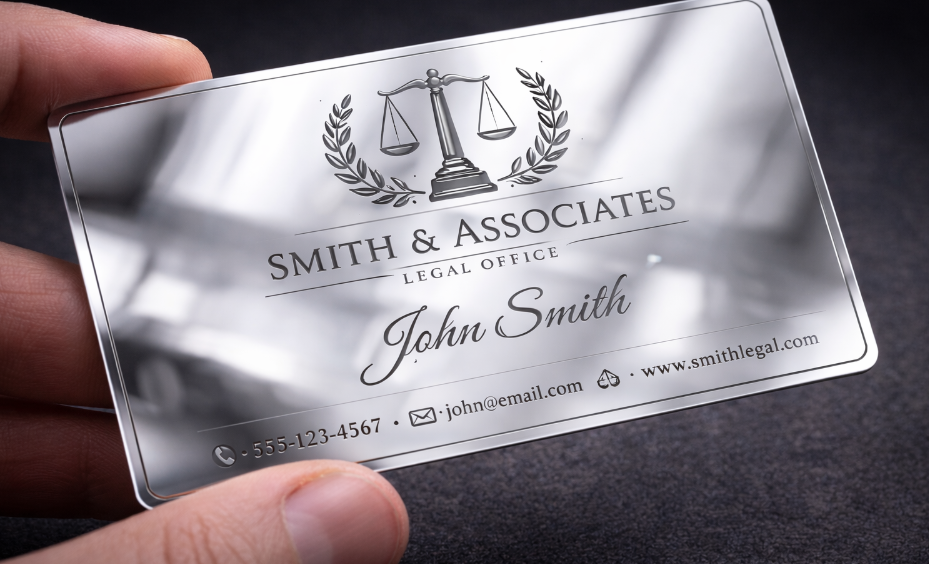
There is a seemingly simple question at the heart of every business-card decision: paper or metal? The price tag makes paper look like the obvious choice. The full math says the opposite. When you put both options side by side on cost, lead capture, and longevity, metal wins by a margin that embarrasses paper.
The Cost Side — Per Card
Paper: ~$0.04 per card at $10 per 250. Metal NFC: $30 to $130 per card, one-time. On a per-unit basis, paper is 750x cheaper. That is the number most people stop at — and the number that makes them buy paper for the next 30 years.
The Cost Side — Over 5 Years
Now factor in reprints. A professional replaces paper cards roughly 6 to 10 times in five years. That is $60 to $120 in sticker cost, plus design and shipping time. A single metal card held for five years is $30 to $130 once. The cost gap shrinks dramatically — and often flips.
The Reprint Trap Over a Career
Stretch the timeline from five years to a full career and the picture gets worse, not better. A realistic breakdown of reprints over a 10-year career looks like this:
- New job or new role: 3 to 5 reprints
- Phone number or email change: 2 reprints
- Company rebrand or merger: 1 to 2 reprints
- Running out at a conference: at least 3 reprints
- Promotion or new title: 2 reprints
That works out to 11 to 14 boxes over a decade — roughly $200 to $280 in sticker cost alone, before design time and shipping delays are counted. A metal NFC card bought once and edited from your phone whenever your title, number, or company changes never re-enters that loop.
The Lead Capture Side
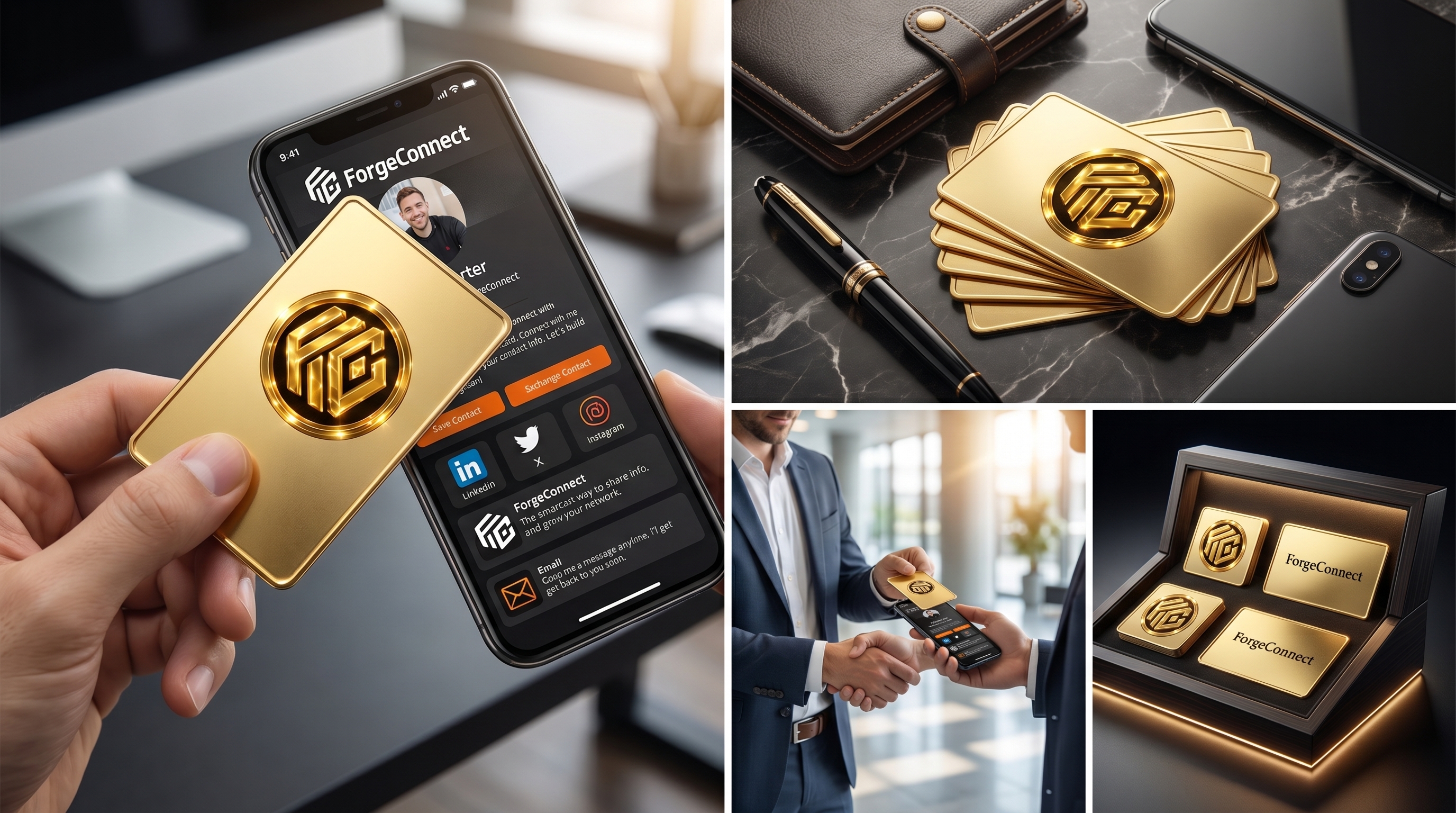
Here is where the math gets brutal. 500 paper cards handed out at a 3% follow-up rate = 15 leads. 500 NFC taps from a ForgeConnect NFC card at a 50% lead-capture rate = 250 leads. Same effort, same crowd, 16x more leads. Link the card to an automated follow-up engine and every one of those leads gets a first-touch within minutes of the tap.
The Revenue Math Is the Real Shock
Leads only matter once they close. Run the same 500-card comparison through an average deal size of $500 and a 10% close rate. At a 3% paper follow-up rate, 500 cards produce 15 leads and roughly 1.5 closed deals — about $750. At a 50% NFC capture rate, the same 500 taps produce 250 leads and roughly 25 closed deals — about $12,500. Same cards. Same effort. 16x more revenue from the card that cost more upfront.
The Longevity Side
Paper cards are trashed 88% of the time within a week — not out of malice, but because they are flimsy, they go through the wash in a pocket, they slide to the bottom of a bag, and by the time anyone goes looking for it, your name is already forgotten. Metal cards live in wallets. They are photographed. Shown to friends. Kept for years. The marketing value of a single metal card over five years is 200 to 500 conversations — far more than any box of paper can deliver.
That durability compounds in a way paper never can. One physical object works the same conference table, the same coffee shop, and the same client meeting hundreds of times over — easily 200 conferences and a thousand coffees worth of taps across five years, with zero reprints, and every tap still feeding a lead into your CRM exactly the way it did on day one.
The Hidden Costs Nobody Puts on the Invoice
Even the paper cards that survive the initial cull come with a problem: the context is gone. A stack of cards from a conference is just names and numbers with no memory attached — who was the hot lead, who was just being polite, what they actually cared about. An NFC tap can be paired with notes, tags, and a timestamp at the moment of capture, so when the lead lands in your CRM pipeline, you still know where you met them and why it mattered.
Then there is the time cost of the reprint cycle itself. Every reorder means updating the template, proofreading it, uploading it, paying, waiting for it to ship, occasionally catching a typo, and starting over. Stretched across a career, that is literal days spent managing a stack of paper. Editing an NFC card takes about 30 seconds, from your phone, and it never ships anywhere.
No matter how premium the cardstock, paper cannot do any of the following:
- Capture the recipient's contact info automatically
- Notify you when someone views your profile
- Update itself when your details change
- Integrate with your CRM or follow-up tools
- Track engagement or repeat visits
Those are not luxuries. They are the difference between a 3% follow-up rate and a 50% one.
The Real Per-Lead Cost
Divide total cost by actual leads captured:
- Paper: $80 over 5 years / 75 leads = ~$1.07 per lead
- Metal NFC: $30 over 5 years / 1,250 leads = ~$0.024 per lead
Metal is roughly 45x cheaper per lead. That is not a rounding error. That is paper losing the category.
Closing the Follow-Up Gap
Capturing a lead only matters if you act on it. Leads contacted within the first hour convert dramatically better than leads contacted a day later, yet most professionals do not follow up for days after meeting someone new. That gap is where already-paid-for leads quietly die.
Manual follow-up fails for process reasons, not lack of intent. You collect the cards, bring them back to the office, sort through them, try to remember which conversation matched which name, enter the details somewhere, and eventually compose a message — every one of those steps is a place a lead can fall through. An NFC tap skips all of it: the contact is captured the instant someone taps the card, a notification lands in your inbox, and the lead is already in your CRM before the conversation is even over.
Pair the card with an automated follow-up engine like ForgeAutoBDC and the gap closes itself — a first-touch message goes out within minutes of the tap, without anyone having to remember to send it.
The Soft Factors Worth Naming
Beyond the spreadsheet, metal cards change how people perceive you. Clients weigh the card. They notice the finish. They ask about it. That is earned attention you cannot buy with a paper stock upgrade. Paper can be expensive. It cannot be impressive.
What Are the Counter-Arguments?
Most of the resistance is not financial — it is habit. The print shop has been there since 1985, and a $30 card triggers more sticker shock than a $10 box, even when the $30 card is the objectively cheaper option over any meaningful timeframe. Once you separate habit from math, the actual objections are thin.
"Metal is overkill." Only if your leads are low-value. If your average deal is $50, paper might be fine. If your average deal is $500+, you are losing money by buying the cheap option. "I like the feel of paper." Fine — paper feels nice. Paper also feels expensive to throw away. Metal feels impossible to throw away. That is the difference.
"But I still want to hand something over." You still can. The handshake and the handoff do not change — only what happens after does. Instead of a card that gets pocketed and forgotten, it gets tapped, saved, and logged into your CRM automatically. The gesture stays. The waste goes.
Where Paper Still Wins
Paper wins in exactly one scenario: you are handing out hundreds of cards per day to random strangers where lead quality does not matter. For almost every other professional context, metal wins on every single dimension that matters for the business.
The Triple Thread That Closes the Case
Paper gets trashed. Metal stays in wallets. Paper is one-way. NFC captures the other person's contact automatically. Paper is static. Metal is editable forever. If you are comparing the two honestly, the brutal math is not hard to read.
Related Reading
Filed under Business Growth
All articles