Most businesses treat their business card as a branding tool. It has the logo. It has the colors. It looks good. And that is where the thinking stops. But a business card is not a poster. It is a touchpoint in a sales process, and when it is disconnected from the rest of your sales system, it is a missed opportunity every time you hand one out.
The Branding Trap
A well-designed card matters. First impressions count. But design alone does not generate revenue. A beautifully printed paper card that ends up in a drawer generates exactly the same amount of business as an ugly one: zero. The value of a business card is not in how it looks. It is in what happens after the exchange.
If your card does not capture data, does not trigger follow-up, and does not connect to your CRM, it is decoration. It is not part of your sales system. It is adjacent to it.

What a Sales-Connected Card Does
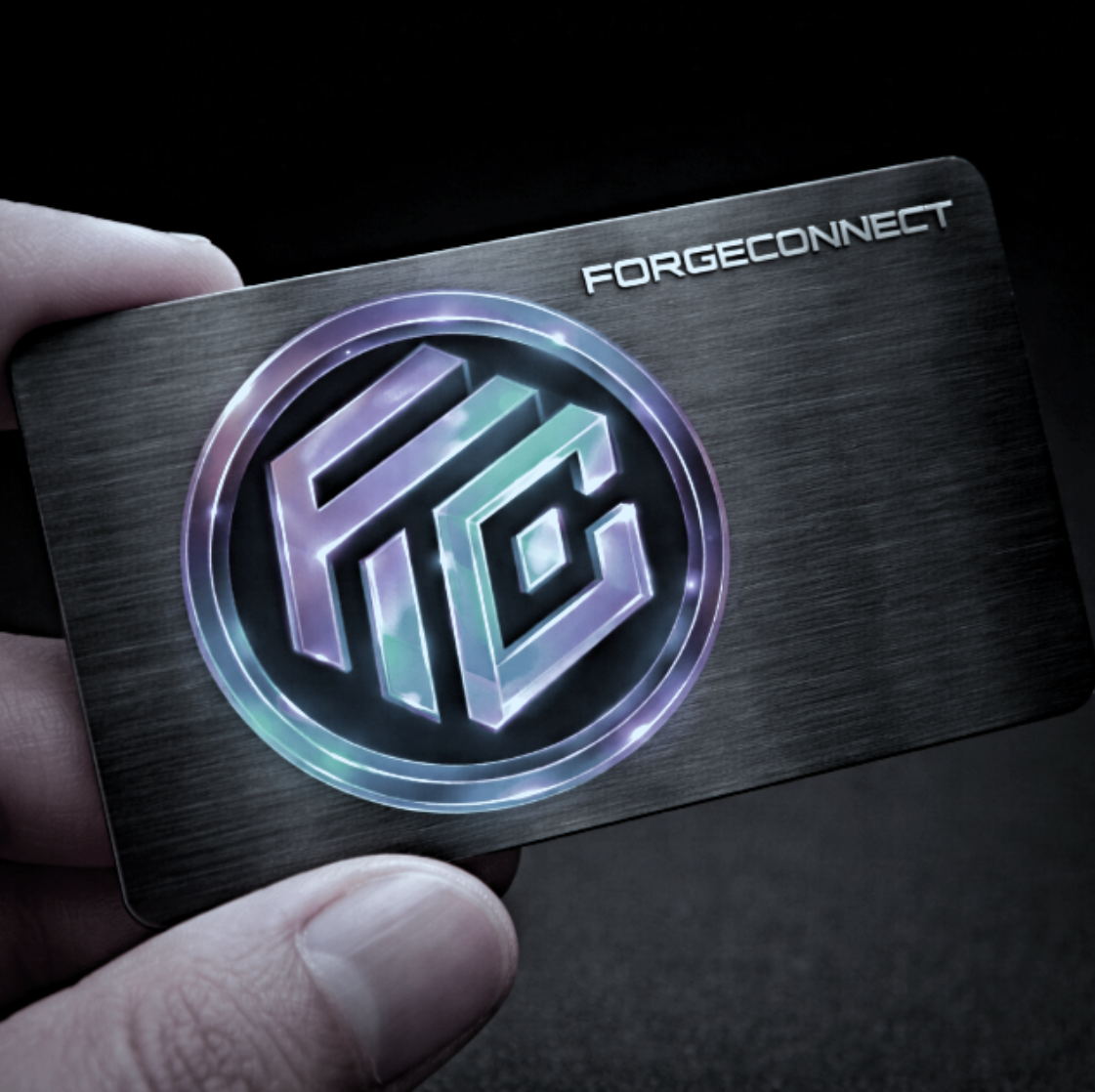
An NFC business card from ForgeConnect functions as the first step in your pipeline. Here is what that looks like in practice:
- You meet a prospect and tap your card to their phone
- Their contact info is captured and logged to your dashboard
- A notification is sent to you or your sales team in real time
- The lead enters your CRM and triggers your follow-up sequence
- A personalized follow-up goes out before the day is over
That is not a business card. That is the top of a funnel. Every tap starts a process that moves a prospect closer to a conversation, and a conversation closer to a deal.
Closing the Gap Between Card and CRM
In most businesses, there is a gap between where a contact is made and where it enters the system. You meet someone at an event. You collect a paper card. Days later, you enter the information manually. By then, the prospect has cooled off, moved on, or forgotten the conversation. Smart business cards eliminate that gap entirely. The data flows from the handshake to the CRM without any manual steps.
Treating Every Card Like a Sales Tool
When you start thinking of your business card as part of your sales system instead of part of your branding kit, everything changes. You stop measuring the card by how it looks and start measuring it by how many leads it captures, how many follow-ups it triggers, and how many deals it influences. That shift in perspective is what separates networking as a social activity from networking as a revenue channel.
Connecting the Card to Your Full Sales Tech Stack
A card by itself is not a system. The system is the card plus the automation behind it. Here is how a complete sales-connected card stack typically looks:
- Smart NFC business card from the ForgeConnect platform for lead capture
- AI outbound engine like ForgeAutoBDC for first-touch follow-up
- CRM integration to route leads to the right owner
- Email platform for nurture sequences and broadcast campaigns
- Analytics dashboard to measure tap-to-deal conversion
Every piece works better when connected. A captured lead that gets an automated personalized SMS within minutes converts far better than one that sits in a spreadsheet waiting for human outreach.
Metrics That Prove Your Card Is a Sales Tool
If your card is truly part of your sales system, you can report on it like any other channel. The metrics that matter:
- Taps per month as a proxy for networking activity
- Capture rate of taps converted to captured leads
- Response rate of captured leads who reply to follow-up
- Meeting rate of responses who book a next step
- Close rate of meetings that turn into deals
If you cannot answer those five questions with real numbers, your card is still a branding tool, not a sales tool.
Scaling the Card Across a Sales Team
For sales teams, the real leverage comes from standardizing a card-to-CRM workflow across every rep. Each rep carries a branded smart business card. Every tap feeds a shared lead pool. Every captured lead triggers the same automated follow-up sequence. Sales managers see a single dashboard with tap counts, capture rates, and conversion data by rep.
Brand Consistency Across a Distributed Sales Team
Standardizing the workflow is only half the job. The other half is standardizing the brand. When every rep sources their own cards from a different print vendor on their own timeline, the result is a patchwork of fonts, layouts, and finishes that undercuts the same brand the company spends its marketing budget building. A centrally managed smart business card program fixes this by design: every rep carries a card that matches the company brand exactly, and the digital profile behind it stays uniform, professional, and current no matter who hands it out.
Why Sales Enablement Teams Adopt Smart Cards
Sales enablement carries the operational cost of every rep's tools: training new hires, chasing brand compliance, and managing vendors. A centrally managed card program collapses most of that work into one system. A new hire's card and digital profile can be set up in minutes instead of waiting on a reprint order. When a title changes, a phone number changes, or a landing page changes, enablement updates it once and every card already in the field reflects the change instantly, with no reprint and no outdated cards left circulating.
Related Reading
- Paper vs Metal Business Cards: The Brutal Math
- Every Paper Business Card You Hand Out Is a Lead You Just Lost
- Events, Trade Shows, and Networking Nights: Stop Letting Leads Slip Away
- NFC Business Cards for Automotive Sales Professionals
- Communication Is Not Just About Reaching People — It Is About Staying Reachable
Filed under Business Growth
All articles