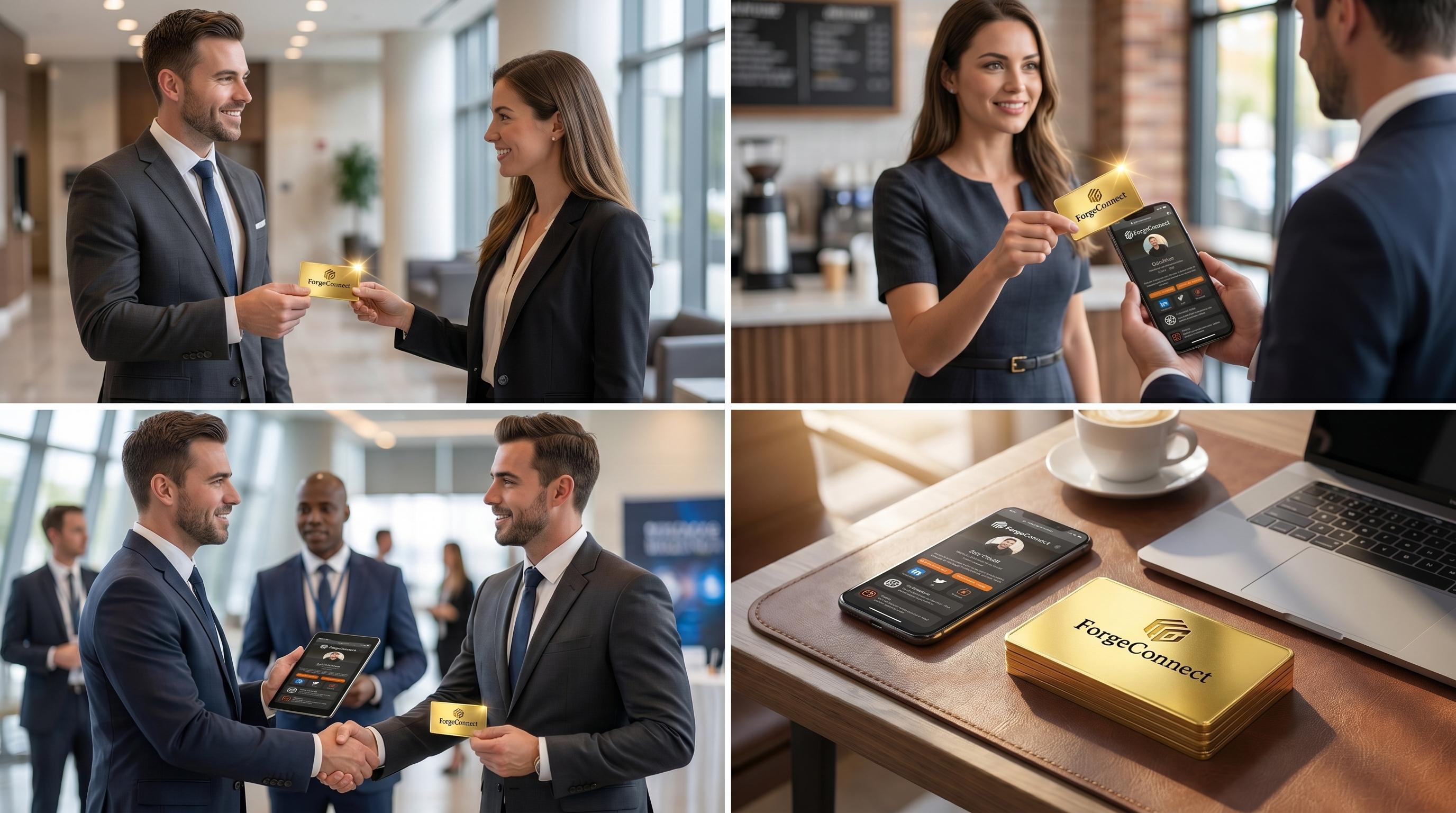
Every paper business card you hand out is a lead you just lost. That phrasing sounds dramatic until you look at the data. When you give someone a piece of paper, you give up 100% of the follow-up control. You are now waiting on a stranger to call you. Statistically, they will not. An NFC card reverses the entire dynamic — and most sales professionals who understand this switch inside the same quarter.
The Handoff Problem
A paper card transfers information in one direction only. You hand your details over. They receive them. That is where the transaction ends. If they lose the card, if they forget your name, if they meant to email you but the week got busy — you will never know, and you have no way to prompt them.
What NFC Does Differently
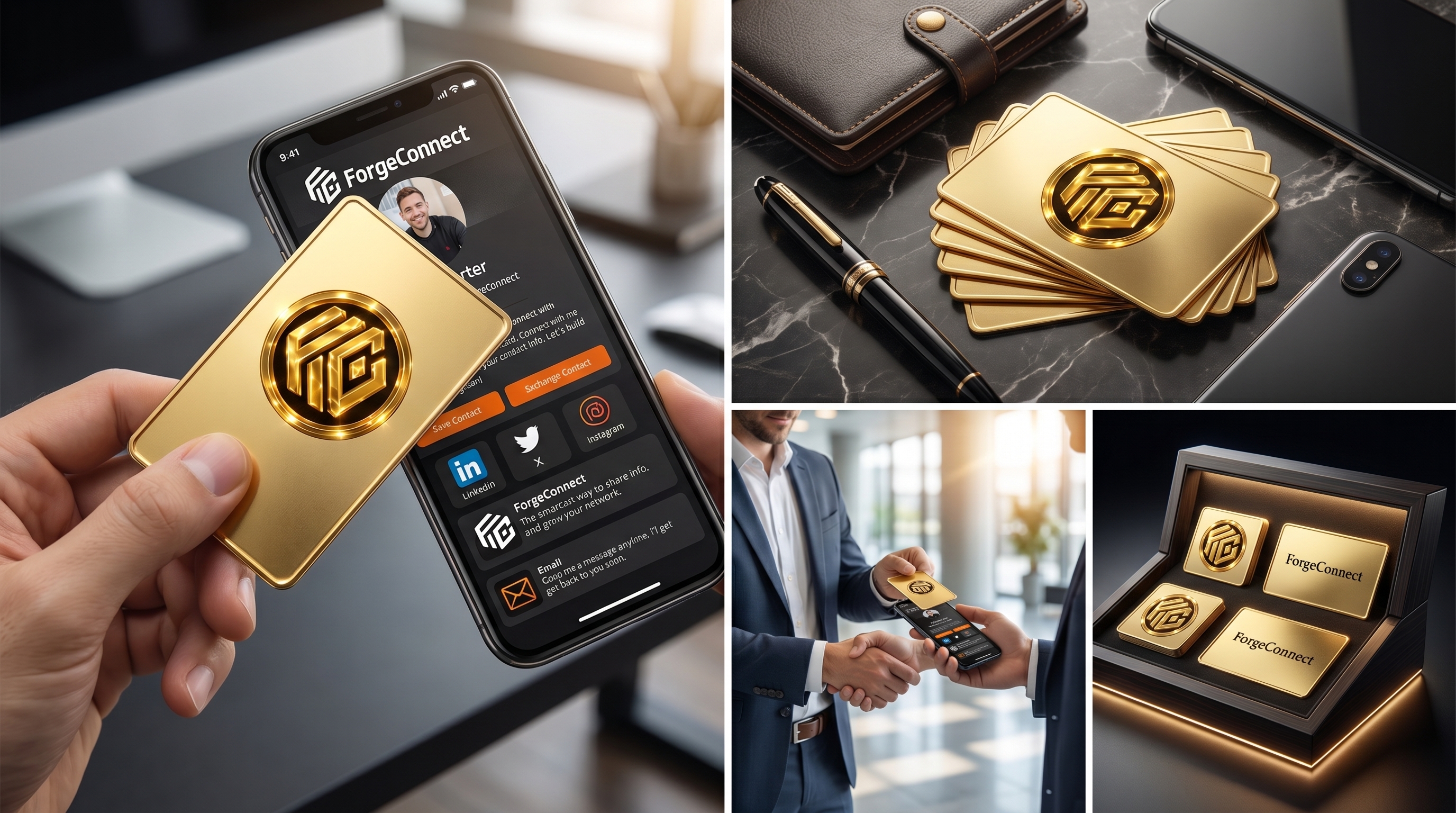
A ForgeConnect NFC business card turns every handoff into a two-way event. When someone taps your card, your profile opens on their phone. A lead-capture prompt lets them share their contact back in one tap. That information lands in your CRM immediately. You are no longer waiting. You already have them.
The Follow-Up Window
Here is a detail that breaks most paper-card strategies: the follow-up window is measured in hours, not days. If you get to a new lead within 24 hours, your close rate can be 5x higher than if you follow up a week later. Paper cards make same-day follow-up effectively impossible because you have not captured anything to follow up to. NFC cards do the capture before you leave the event, and a follow-up engine like ForgeAutoBDC can send a personalized first-touch while the conversation is still fresh.
The Two-Way Network Effect
When both sides walk away with contact information, the relationship has two entry points. Either side can initiate the next conversation. The odds of something happening roughly double — and for high-value leads, the difference between a 3% follow-up and a 50% follow-up is the difference between a dead channel and a real pipeline.
The Math That Sells Itself
Run those numbers at the scale of a single event. Hand out 100 paper cards at a 3% follow-up rate and you get 3 follow-ups — realistically, 1 closed deal. Hand out 100 NFC taps instead, and a 50% lead-capture rate puts 50 leads straight into your CRM, which at the same close rate is 5 deals. That is 5x the revenue from the exact same number of handshakes, and it compounds at every event you attend after this one.
This is also why the fix is not more sales training. Sales leaders spend heavily on scripting and coaching, and all of it is wasted if the lead was never captured in the first place — you cannot call someone whose email you never collected, and you cannot nurture a pipeline that does not exist. The cheapest revenue upgrade most sales teams can make is closing the capture gap before trying to close the deal.
What You Can See That Paper Hides
Paper cards give you zero data. An NFC tap gives you:
- Timestamp of the interaction
- Profile view tracking and repeat visits
- Which lead-capture fields they filled in
- Which event or campaign produced the tap
- Direct integration with your CRM
That visibility is the difference between selling in the dark and selling with a dashboard. Plug it into the LiveLeads pipeline and every lead drops into routing automatically.
It is also more accurate. Contact details typed by hand are full of small errors — a misspelled name, a transposed digit in a phone number, an email with one wrong character. Data captured directly through the tap skips manual entry entirely, so the follow-up you send actually reaches the person you met.
Where NFC Fits Into a Bigger Lead Strategy
NFC cards are powerful, but they capture one specific type of lead: in-person, high-intent contacts from conversations you personally started. A complete pipeline layers that stream with others — purchased real-time leads from LiveLeads to fill quiet weeks, website form captures from inbound traffic, and AI outbound that reactivates contacts who have gone quiet. Treat your NFC card as the top of the funnel for relationships you started yourself, not as your entire lead-generation strategy.
Common Mistakes That Waste an NFC Card
Most businesses that adopt NFC cards get lead capture partially right and leave the rest of the value on the table:
- Not enabling lead-capture mode in their profile settings
- Asking for too many fields, which drops completion rates
- Skipping follow-up automation, which wastes the lead they just captured
- Never reviewing analytics to see which events actually convert
Fixing those four issues typically doubles the pipeline value of an NFC program on its own. Capturing the lead is only half the job — automated, same-day follow-up is the other half.
The Objection Everyone Asks
"But I do not want to be pushy with a lead-capture prompt." Totally fair — and that is exactly why NFC platforms let you configure the prompt to be lightweight, optional, or triggered only after profile viewing. You do not have to force the capture. You just have to offer it. Most recipients opt in because opting in is easier than not.
The Human Side
Here is the quiet part: most people want to be followed up with. They gave you their time and hoped something would come of it. A paper card makes them do all the work to make that happen. An NFC card makes it automatic. The shift is not just a numbers game — it is a respect shift. You are showing up for the conversation they already wanted to have.
The Message Underneath the Message
When you hand over a metal NFC card instead of paper, you are also signaling something about how you run your business. You are telling the other person: I take follow-up seriously, my systems are tight, my brand is premium, and I will not be one of those people who calls six weeks late after finally finding the card in a drawer. That signal closes deals before the first follow-up email is ever sent.
The Triple Reality
Paper cards are dying in wastebaskets at an 88% clip. NFC metal cards capture leads at the tap so you are never waiting for a callback. And the card itself sits in wallets for years, re-tapping, re-exposing your profile, and re-opening deals long after the initial handshake. Every paper card you hand out costs you all three. Every NFC tap buys you all three.
Related Reading
Filed under Business Growth
All articles