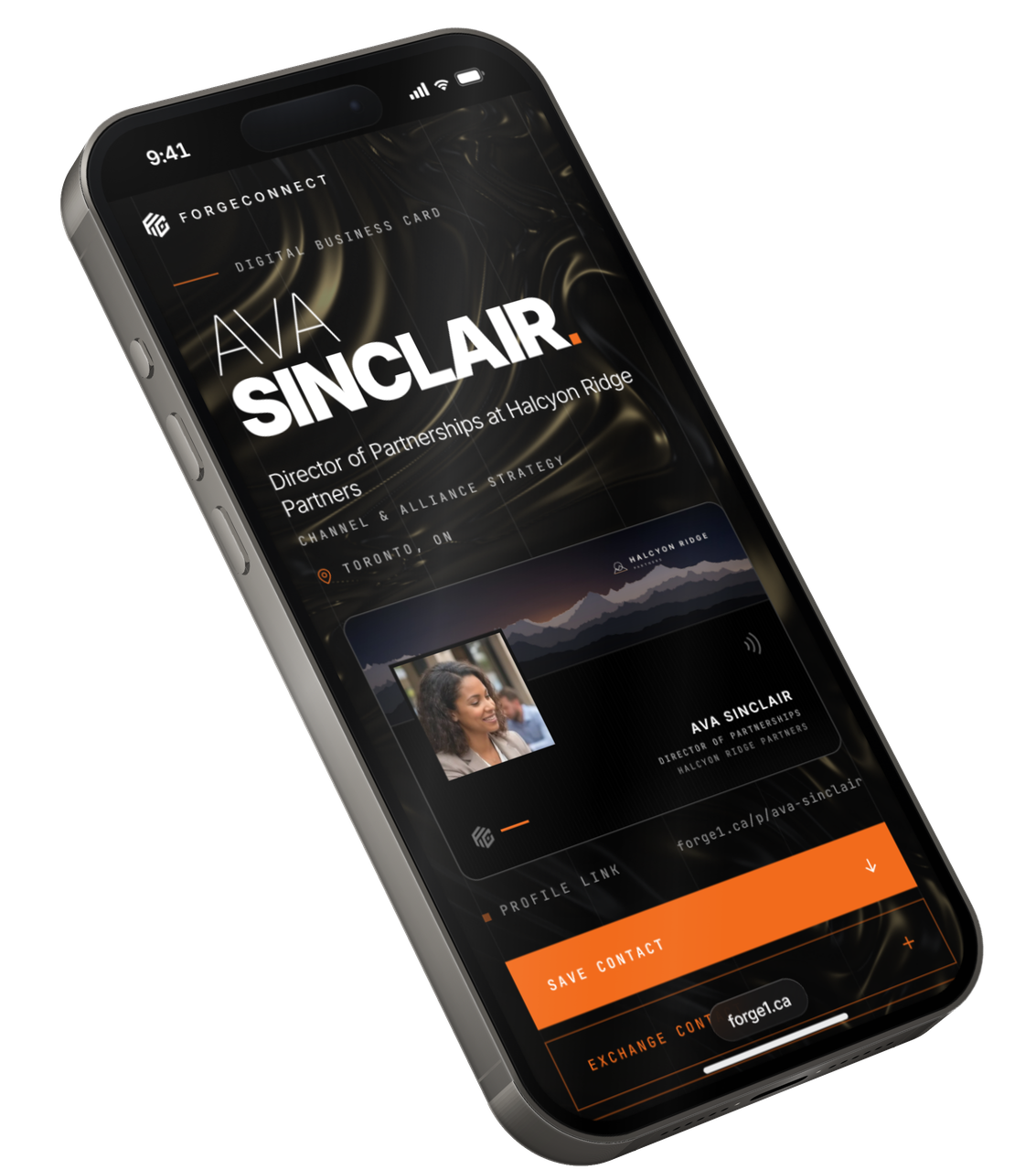
The debate between digital and paper business cards is not new, but it has reached a tipping point. More professionals are asking whether it still makes sense to carry paper cards when digital alternatives offer so much more functionality. Here is a direct comparison.
Information Sharing
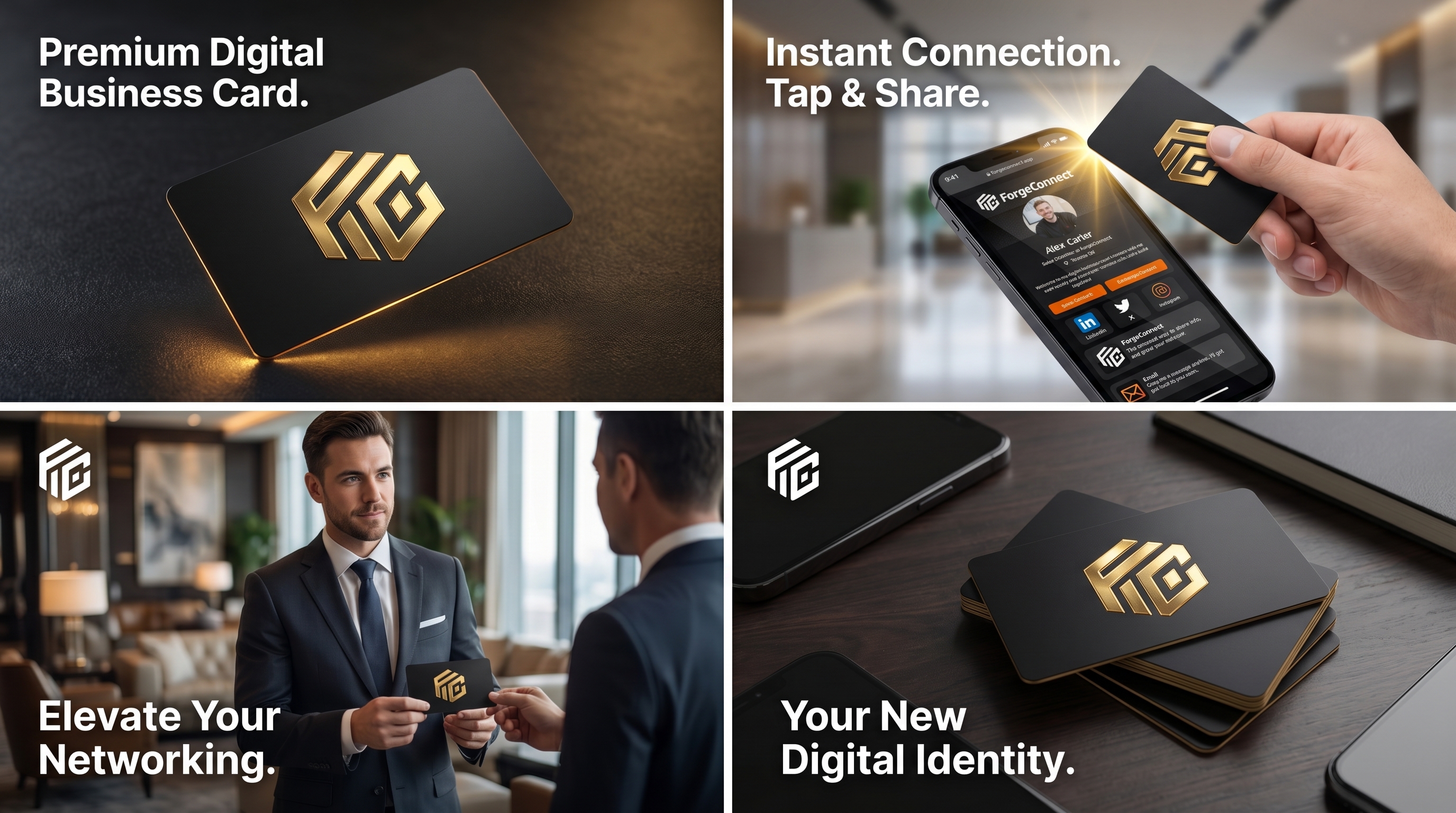
A paper card holds a limited amount of text. A digital card can include your name, title, phone, email, website, social media links, bio, portfolio, and more. With a ForgeConnect NFC card, all of that information is shared with a single tap. No typing. No spelling errors. No running out of cards.
Updatability
Paper cards are frozen in time. Once printed, the information cannot change. Digital cards can be updated at any time. New phone number? Updated in seconds. New title? Changed instantly. This alone saves businesses hundreds of dollars per year in reprinting costs.
Lead Capture
Paper cards are a one-way exchange. You give your information, and you hope to receive theirs. Digital NFC cards enable two-way exchange. When someone taps your card, they can be prompted to share their own details. That means every card exchange becomes a captured lead.
Environmental Impact
Billions of paper business cards are produced globally each year. The vast majority are discarded within days. A single NFC card replaces thousands of paper cards over its lifetime. For businesses with sustainability commitments, the math is clear.
The Verdict
Paper cards still have a place in certain traditions and cultures. But for functionality, cost-effectiveness, and lead generation, digital NFC cards are the better choice for modern professionals.
What a Modern Digital Business Card Actually Does
A modern digital business card platform is not just a contact sharing tool. It is a networking system. The card shares your profile, captures leads, tracks engagement, and connects to the rest of your growth stack. Every tap is a data point. Every captured lead is an opportunity. Every profile view tells you who is engaged and ready for follow-up.
- Live profile editing that works across every card you have distributed
- Native lead capture with customizable form fields
- Analytics dashboard for tap counts, profile views, and conversions
- Save-to-contacts vCard download with correct vCard formatting
- Brand theming to match your logo, colors, and typography
Common Objections to Digital Business Cards
Some professionals hesitate to switch because they worry a digital card feels less personal, that older clients will struggle with the tech, or that the card does not work on all phones. In practice, the tap experience is the most seamless contact share available, NFC is built into every modern iPhone and Android phone, and the QR fallback handles edge cases. The tech has been ready for years. The perception is the only thing that still needs updating.
When to Keep a Paper Card as a Backup
Some cultures still expect a paper exchange. In those cases, carry a small stack of paper cards as a courtesy while using your NFC business card for any captured lead or actionable follow-up. The paper card preserves the ritual. The smart card preserves the pipeline.
Related Reading
Filed under NFC Technology
All articles