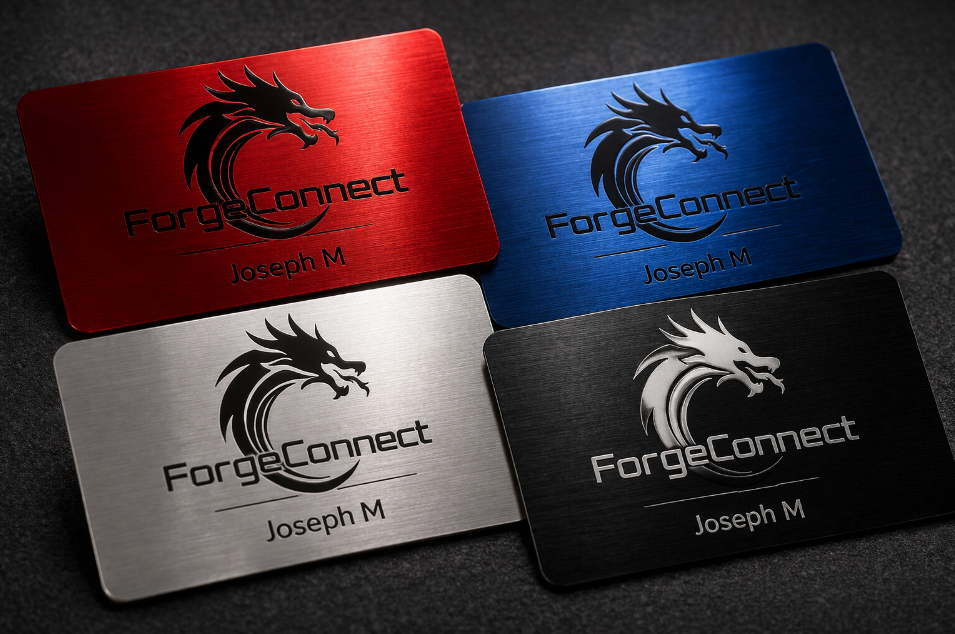
There was a time when handing someone a paper business card felt like a professional standard. It signaled credibility. It closed the loop on a conversation. But that era is fading, and the businesses still relying on paper cards are paying a price they may not even realize.
The Friction Nobody Talks About
Paper cards introduce friction at the worst possible moment: right after a promising conversation. You hand someone a card. They pocket it. Days later, they find it crumpled in a jacket. Maybe they try to type in your number. Maybe they do not. The card created a gap between interest and action, and most leads die in that gap.
Consider the full chain of events: you pay for design, pay for printing, carry the cards to events, hand them out, and then hope the recipient takes a manual action to save your information. Every link in that chain is a potential failure point. NFC business cards eliminate every one of those steps with a single tap.
The Data Problem Is the Real Problem
Paper cards generate zero measurable data. You cannot track how many people looked at your card, how many saved your number, or how many visited your website afterward. You are investing in a tool that gives you no feedback whatsoever. Compare that to a ForgeConnect NFC card that logs every tap, captures visitor details, and tells you exactly who engaged with your profile.
Every tap logs the time, the location, and the engagement behind it. You see which trade show actually produced interest, and which prospect re-visited your profile three times before ever picking up the phone. Without that data, you cannot improve your networking, measure ROI from events, or identify which conversations turned into leads and which ones disappeared. Paper cards keep you blind.
Passive Cards vs Intelligent Cards
The conversation about business cards usually gets framed as paper versus digital. That is the wrong axis. The real divide is passive versus intelligent — what the card does after the exchange happens, not what it is made of.
A passive card, whether it is paper or a basic digital file, does one thing: it delivers a name and a number. After that, it sits in a pocket, a drawer, or a phone contact list. There is no follow-up, no data, no engagement tracking. It did its job at the moment of exchange, and then it stopped working. An intelligent business card does not stop working after the handshake. It captures the other person's information, notifies you when someone views your profile, and connects directly to your CRM as part of your sales pipeline.
This is why not every alternative to paper is actually an upgrade. QR-printed postcards are still paper and still disposable. App-only digital profiles have nothing physical to hand over at all. Only an NFC metal card combines a premium object worth keeping with an intelligent system behind it, which is why it is the version of "digital" actually replacing paper, rather than just sitting next to it on the shelf.
The Wallet Test
Here is a quick gut check: of the last 20 paper cards you were handed, how many could you actually put your hands on right now? For most people, the honest answer is zero. Paper cards fail the wallet test because they are bulk, forgettable objects with no physical appeal, so they get filed into a drawer and never looked at again. A metal card passes easily. It has weight. It looks deliberate. It earns a permanent slot next to a driver's license and a credit card, which is exactly why it is still there to be tapped again months later.
Reprinting Is a Hidden Expense
Every time your phone number, email, job title, or company name changes, your entire card inventory becomes obsolete. For growing businesses, this happens more often than people admit. The cost of reprinting hundreds or thousands of cards adds up quickly, not to mention the environmental waste. A digital business card linked to a live profile never needs reprinting. You update once, and every card you have ever given out reflects the change instantly.
- No reprinting costs when your details change
- No outdated cards circulating with wrong information
- No wasted inventory sitting in a desk drawer
- No missed connections from unreadable or lost cards
The Follow-Up Breakdown
The biggest failure of paper cards is not the card itself. It is what does not happen afterward. You collect a stack of cards at a conference. You bring them back to the office. Between data entry, sorting, and daily demands, most contacts never get followed up on. The opportunity dies quietly, and you never even know it existed.
Most businesses do not actually have a lead volume problem. They have a follow-up problem: first impressions do not convert into conversations because the system behind the handshake is broken, not because there were too few handshakes to begin with. Smart business cards solve this by capturing lead information at the moment of exchange and feeding it directly into your workflow. No sorting. No data entry. No delay. The follow-up can start the same day.
The Shift Is Accelerating
Forward-thinking businesses are not just digitizing their cards. They are replacing a dead-end tool with a networking system that captures data, stays current, and drives measurable results. If your current card cannot tell you who looked at it last week, it is already behind.
What a Modern Networking System Looks Like
The businesses winning the transition are not just swapping paper for plastic. They are rethinking the entire networking workflow. A smart NFC business card platform sits at the center, but it connects to outbound automation, content distribution, and CRM routing. Every tap becomes a measurable event in a larger growth system, not a hopeful handoff.
- Live profile editing that never requires a reprint
- Lead capture that converts every exchange into tracked data
- Real-time analytics on taps, views, and engagement
- CRM sync that eliminates manual data entry
- No app required for the recipient, who sees your profile instantly in their browser
Industries Moving Fastest Away From Paper
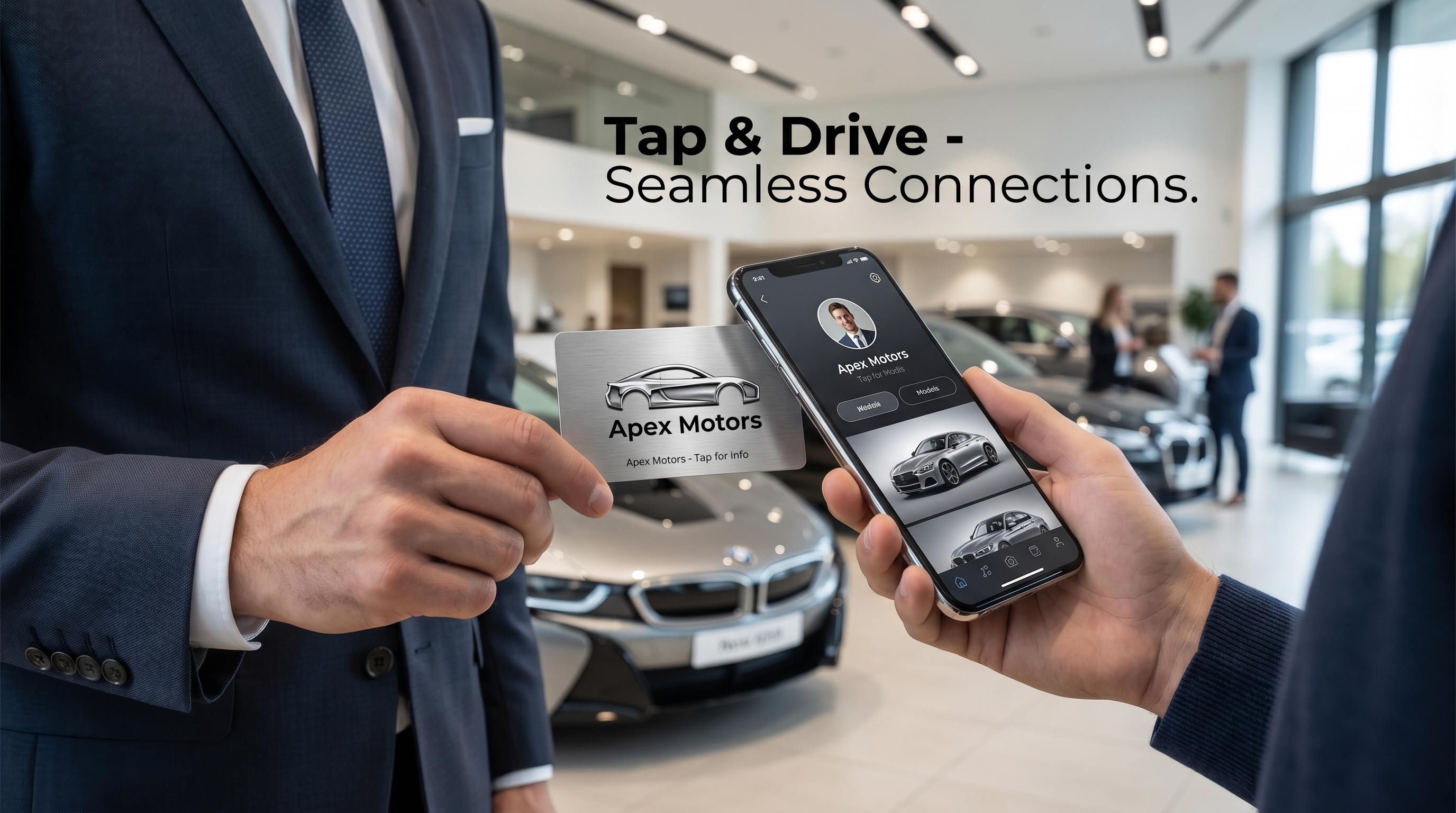
Real estate, financial services, automotive sales, and professional consulting are the industries driving the shift fastest, joined closely by sales leadership, executive coaching, luxury retail, and legal. All share a common trait: face-to-face relationships drive revenue, and every lost lead has a high dollar value. In those fields, the cost of a missed follow-up is measured in thousands of dollars, not a few pennies of paper. Upgrading to a digital business card with lead capture is not a luxury. It is a defensive move against pipeline leakage.
The Cost of Waiting
Every month you continue using paper cards is a month of missed data, lost leads, and slower follow-up. The businesses that upgraded two years ago already have the analytics, the CRM workflows, and the automated follow-up systems tuned to perform. The longer a business waits, the bigger the gap becomes. If you are still reprinting paper boxes, the simplest fix is to stop the next reorder — even switching half your team to smart cards shows a measurable difference at the very next event.
The Short Answer
Paper business cards are outdated. The physical business card itself is not — it just needed to grow up. The next generation captures leads instead of waiting for a callback, stays in wallets instead of getting trashed, and keeps working for you years after you hand it across the table.
Related Reading
Filed under Industry Insights
All articles