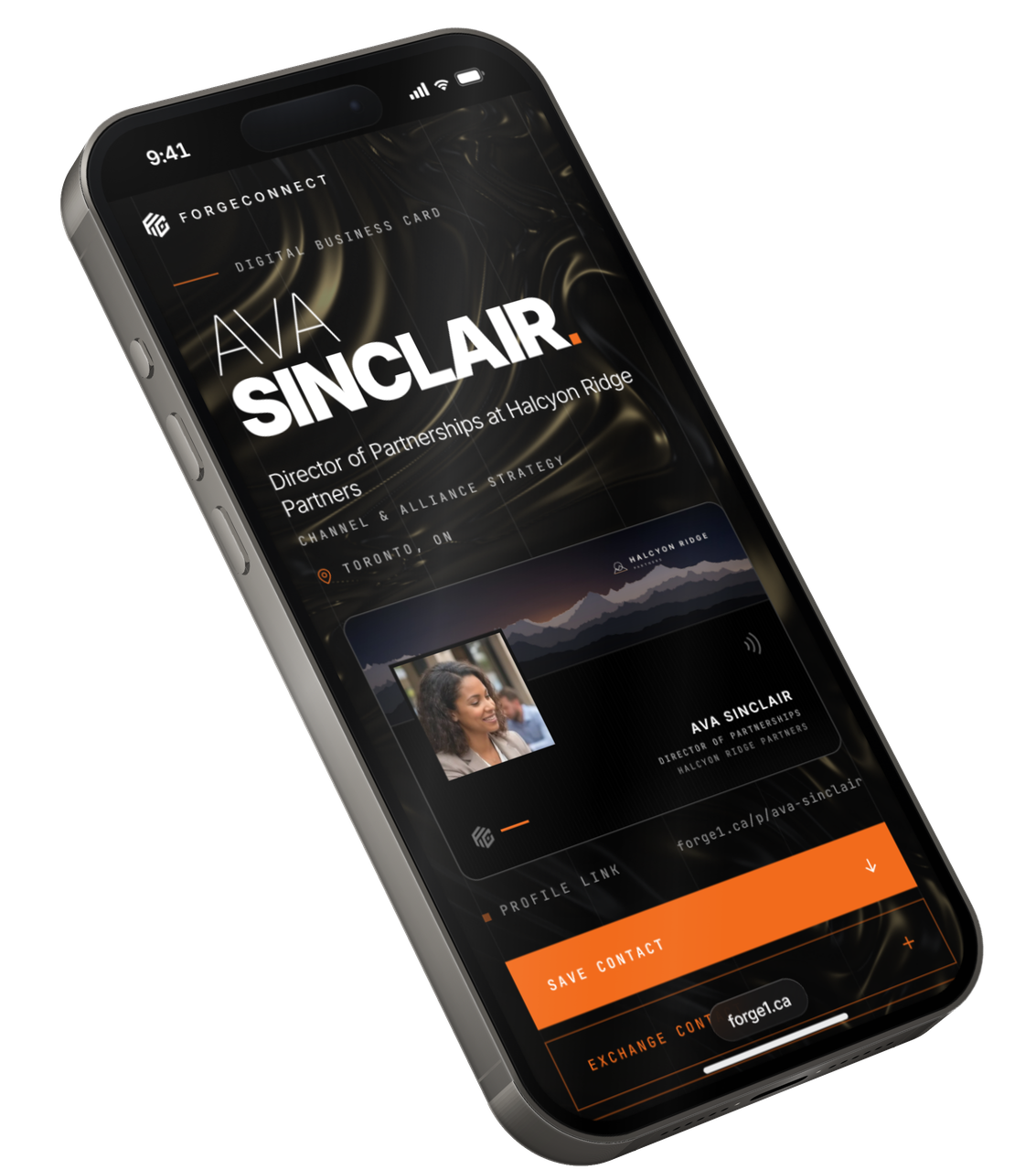
Businesses invest heavily in outreach. Ads, content, cold emails, event attendance. All of it designed to put you in front of new people. But there is a quieter, equally important side of communication that rarely gets the same attention: making sure the people who already know you can still reach you when it matters.
The Reachability Gap
Think about how many times your contact information has changed in the last five years. New phone number. New email address. New job title. New company. Every change creates a gap between you and the people who have your old information. Some of those people will track you down through LinkedIn or a Google search. Most will not. They will try the old number, hit a dead end, and quietly move on to someone else.
This is not a minor inconvenience. It is a revenue leak. The most valuable leads in your network are often the ones who come back months or years after the first contact. A former client with a new project. A conference contact who is finally ready to buy. A referral partner who has someone to send your way. If your information is outdated, those connections evaporate.

Why Static Contact Info Fails
Paper cards, static vCards, and even most digital business cards share the same weakness: they deliver a snapshot of your information at a single point in time. The moment anything changes, every copy you have ever distributed becomes inaccurate. You cannot recall them. You cannot update them. You can only reprint and hope the right people get the new version.
- Paper cards become obsolete with every job change or phone swap
- Static digital files cannot update themselves after they are shared
- LinkedIn profiles require the other person to check your page manually
- NFC cards with live profiles always point to your current information
The Live Profile Solution
An NFC business card from ForgeConnect does not store your contact details on the card itself. It links to a live digital profile that you control. When you update your title, phone number, website, or social links, every card you have ever given out instantly reflects the change. The person you met three years ago can tap that same card and reach you today.
This is not just a convenience. It is a networking strategy. Every card you hand out becomes a permanent access point to your current self. The longer you use it, the more valuable it becomes.
Protecting Your Existing Network
Most networking tools focus entirely on making new connections. That matters. But protecting the connections you already have is just as important. A single NFC card that stays current forever means you never lose a relationship because someone could not find your updated number.
How a Smart NFC Card Platform Makes Reachability Permanent
A ForgeConnect smart NFC card platform treats your profile as a living document. Every time you update your role, phone, email, or social links, the change propagates to every card you have ever distributed. There is no version control issue. There is no stale data. The card someone received in 2023 still points to your current 2026 information.
- Permanent profile URL that never changes, even when everything else does
- Unlimited updates with no reprint costs
- Redirect rules if you ever need to point to a new profile
- Analytics that show when old contacts reconnect
The Long-Tail ROI of Staying Reachable
Some of the most valuable business conversations happen years after the initial meeting. A former client who now has budget. A conference contact who finally has the right project. A referral partner who just discovered your perfect-fit customer. Each of those conversations depends on one thing: they still have a way to reach you. A digital business card with a permanent URL keeps that long-tail pipeline alive indefinitely.
What Reachability Means for Team Continuity
Businesses that experience turnover, rebrands, or office moves often leak relationships. Staying reachable is not just an individual benefit. It is a team-level capability. Centralized profile management lets entire sales teams maintain consistent reachability even as individual members change roles or leave.
Quality Connections Beat More Connections
There is a common assumption that business growth comes from meeting more people: more events, more handshakes, more cards exchanged. But meeting fifty people at a conference means nothing if you only follow up with three of them, and none of those three were the right fit. The problem is rarely a lack of exposure. It is a lack of process behind the exposure. The professionals who build the most profitable networks are not the ones who collect the most contacts. They are the ones who convert the right contacts into real relationships.
A stack of paper cards in a drawer does not build a pipeline. A handful of contacts who get a timely, deliberate follow-up does. That is the same principle behind staying reachable: the goal was never to be reachable by everyone — it is to make sure the right people, the ones actually worth staying in touch with, never lose the ability to reach you. Fewer, higher-quality connections paired with a live profile that never goes stale will outperform a bigger stack of cards every time.
Related Reading
Filed under Networking
All articles