Communication Technology Should Feel More Human, Not Less

Technology has a reputation for making communication feel impersonal. Automated emails that read like templates. Chatbots that do not understand the question. CRM systems that reduce people to data points. It is easy to see why some professionals resist adopting new tools. But the problem is not with technology itself. It is with how most technology is designed.
The Problem With Friction, Not Technology
The real enemy of human connection is not automation. It is friction. Every extra step between meeting someone and staying in touch is a point where the relationship can break down. Sorting through paper cards, manually entering data, composing follow-up emails days after the conversation, these are the things that make communication feel transactional. The solution is not to avoid technology. It is to use technology that removes friction instead of adding it.
When someone taps your ForgeConnect NFC card and instantly sees your name, face, role, and links, that is not an impersonal interaction. It is a seamless one. The technology disappears. The connection stays.
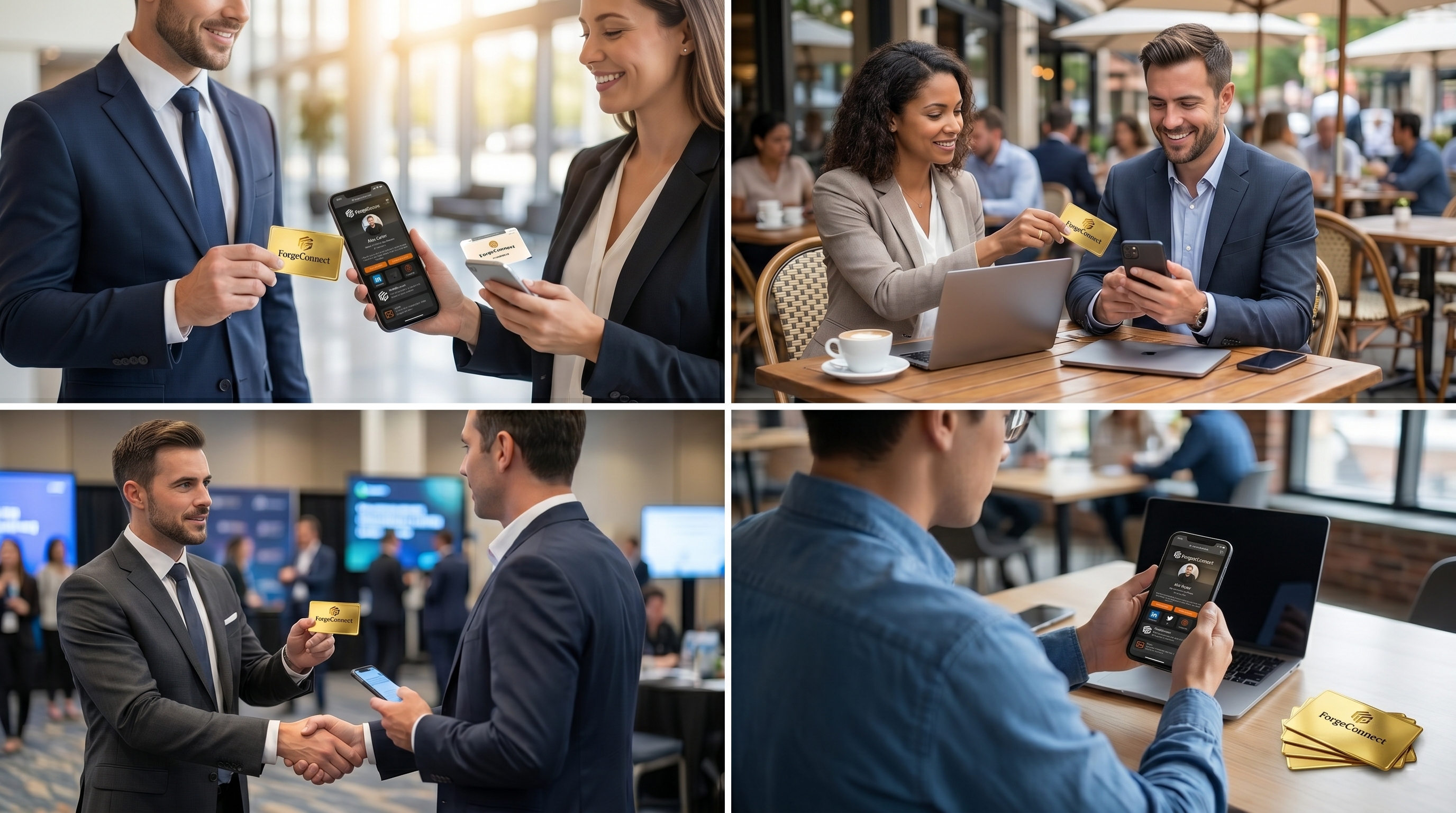
What Human-First Technology Looks Like
The best communication tools share a common trait: they get out of the way. They do not force the other person to download an app, scan a QR code, or navigate a complicated interface. They do not replace the conversation. They preserve it.
- No app required for the person receiving your card
- Instant profile access with a single tap
- Automatic lead capture that does not interrupt the conversation
- Follow-up triggers that work in the background, not in front of the prospect
This is what it means for technology to feel human. The person you meet does not feel like they are being processed. They feel like they are being connected with. The difference is subtle but important.
Automation That Serves the Relationship
Automation gets criticized when it replaces personal attention with generic templates. But automation that captures a lead, notifies you in real time, and queues a personalized follow-up is not impersonal. It is attentive. It ensures that the human connection you just made is not lost to a busy schedule or a forgotten business card.
The best digital business cards do not make you feel like you are talking to a machine. They make it easier for two people to stay in touch, which is what communication technology was always supposed to do.
Technology Should Amplify, Not Replace
The goal of any good communication tool is to amplify what you already do well. If you are great at conversations, your card should make sure those conversations lead somewhere. If you are great at follow-up, your system should make sure no lead falls through the cracks. Technology that serves the relationship instead of replacing it is technology worth adopting.
The Right Role for AI in Business Communication
AI has a reputation for making communication feel robotic. That is only true when AI is used as a replacement for human judgment. Used as an assistant, AI can draft personalized messages faster, surface context about a contact before a call, and handle the administrative work that otherwise eats into relationship time. An AI agent orchestration platform that handles the logistics leaves you free to focus on the human part of the conversation.
- AI-drafted first messages that reference specific conversation context
- Automatic meeting recaps that save rep time without losing detail
- Smart routing so the right person handles the right conversation
- Context enrichment that surfaces prior touchpoints before a call
Designing Communication Tools That Disappear
The best test for a communication tool: does the other person even notice it is there? A smart NFC business card passes that test because the visitor does nothing except tap their phone. An AI-generated follow-up message passes that test when it reads like a thoughtful personal note, not a template. The invisible tools are the ones that preserve human connection.
What It Looks Like When Technology Gets in the Way
Bad communication technology shares common symptoms: it asks the recipient to download an app, fill out a long form, or scan a complex QR code. It sends generic automated messages that feel like spam. It interrupts the flow of a real conversation to capture data. These are all signs that the tool is making life harder for users to make life easier for administrators. The priorities are inverted.
The ForgeConnect Philosophy
Everything in the ForgeConnect ecosystem is designed to stay out of the way while doing more work in the background. A tap shares a profile. A captured lead triggers an automated sequence. A dashboard surfaces only the signals that matter. The human experience stays simple. The operational lift stays invisible.
Related Reading
Related Posts
Business Card Alternatives: 7 Modern Ways to Share Your Contact in 2026
From digital signatures to NFC metal cards, here are the seven best business card alternatives in 2026 — and why only one of them actually captures leads and stays in wallets.
Industry InsightsAre Business Cards Outdated? What's Replacing Them in 2026
Are business cards outdated? Paper ones, yes. Smart NFC metal cards are replacing them — and the professionals making the switch are keeping far more leads.
Industry InsightsBusiness Cards for Financial Advisors: Why Smart Cards Close More Deals
Financial advisors live or die by trust and book-building. Here is why NFC metal business cards are outperforming paper for compliance-conscious advisors in 2026.